How to Write a Software Project Brief as a Non-Technical Founder (Template Inside)
2026-10-04 · Appsoluty team
A software project brief is the one document that decides whether a developer builds what you actually need or spends three months guessing at it on your dime. If you run a clinic, a logistics company, or a law practice and you're about to hire someone to build you an app, you don't need to learn to code to write a good brief. You need to get down, in plain language, what the thing does, who it's for, and exactly where it stops. That last part is the one most founders skip, and it's the one that ends up protecting the budget more than anything else in the document.
This is for anyone scoping a software project without a technical background: a domain expert launching something new, or a founder who built the first version on a no-code platform and has outgrown it. Founders migrating off no-code need this exact document just as much as someone starting from a blank page, because the workflow knowledge already lives in their head. It just hasn't been written down in a form a developer can use.
Why your brief matters more than your idea
Ideas are cheap. Every founder has one, and most of them are decent. What's rare is a founder who can hand a developer a clear, bounded description of what to build instead of a verbal pitch that changes every time they repeat it. A developer who gets a vague ask will fill the gaps with assumptions, and those assumptions are usually wrong, because the developer doesn't run your business. You do.
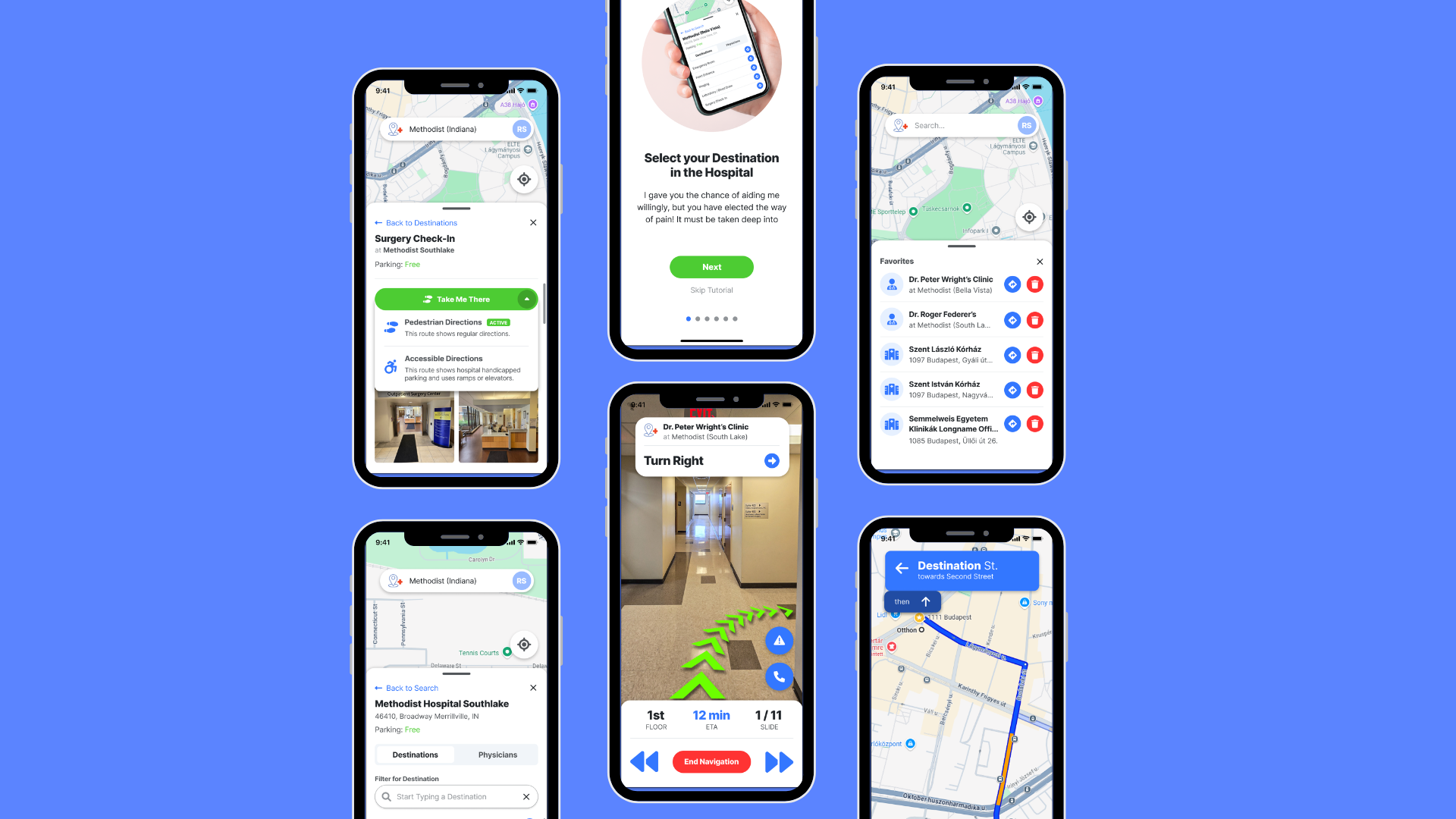
This is the actual value a domain expert brings to a build: not the idea, but the process knowledge. Discover My Doc, for example, is a healthcare navigation platform built to help patients find their way to medical appointments with less stress and confusion. That's exactly the kind of workflow problem a domain expert is positioned to describe clearly, even without technical training, because the problem lives in how people actually search for care, not in how the software gets coded. That's what a brief does. It transfers what's in your head into a form someone else can act on.
Skip this step and you don't save time. You just move the cost of figuring out the scope from the brief-writing stage, where it's cheap, to the build stage, where every clarification is a change order.
The 7 things a developer actually needs from you
The problem, in one paragraph (no tech jargon)
Start with the problem the software solves, in plain language, before you describe any feature. If you can't state it in one paragraph without using the word "platform" or "solution," you haven't nailed it down yet. "Our intake coordinators spend 20 minutes per patient manually checking insurance eligibility across three different portals" is a problem. "We need an all-in-one patient management solution" is not; it's a description of nothing.
Who the user is (personas, in plain language)
Name the people who'll actually touch the software, by role, not by demographic. A dispatcher is not the same user as a driver, and a driver is not the same user as the owner reviewing reports at the end of the week. Each of them needs different screens and different permissions. If your brief only describes "the user" as a single abstraction, the developer will build one set of screens that serves nobody well.
The core workflow, screen by screen
Walk through what happens from the moment someone opens the app to the moment they're done with the task that matters most. Don't describe every screen in the product, just the one or two paths that carry the bulk of real usage. If you can sketch it on paper as a sequence of boxes with arrows between them, you've already done the hard part; the developer just needs that sequence written down.
Features as user stories ("As a [user], I want to... so that...")
Once you know the user and the workflow, turn each feature into a sentence in this shape: "As a dispatcher, I want to see which drivers are within five miles of a pickup, so that I can assign the closest one without calling around." That format forces you to connect every feature to a real person and a real reason, which keeps the list from turning into a wish list of things that sound nice but nobody asked for. A developer reading a stack of user stories like this can estimate effort and spot conflicts far faster than from a paragraph of prose.
What's explicitly OUT of scope
This is the section founders skip, and it's the one I'd argue matters most. If you don't write down what the software won't do in this phase, "maybe later" has a way of becoming "well, obviously you should've included that" once the invoice arrives. Listing out-of-scope items isn't pessimism. It's one of the most effective ways to keep a fixed idea from quietly growing into a different, bigger project that nobody priced. A one-line list like "no multi-language support in v1, no payment processing, no admin reporting dashboard" does more to protect your budget than another page of features would.
Budget and timeline reality
Say what you actually have to spend and by when, even approximately. Developers estimate differently when they know the real constraint versus when they're guessing at your ceiling. Vague budget expectations are part of why budgeting realistically before you scope the work matters as much as the brief itself, and that's doubly true once you factor in the quiet cost difference between hourly and milestone-based engagement models. Put a number or a range in the brief. If you genuinely don't know, say that instead of leaving the question blank; a developer can work with "I don't know yet, here's my rough sense of what's reasonable" far better than with silence.
What to leave out (tech stack, DB schema, pixel specs, not your job)
Don't specify the programming language, the database structure, or exact pixel measurements for buttons. That's the developer's job to figure out based on what you've described, and prescribing it anyway either ties their hands for no reason or signals that you don't trust them to make calls they're better positioned to make than you are. If you have a strong preference (you've been burned by a specific platform before, say), mention it as a constraint, not a specification.
A one-page template you can copy
Here's a structure you can fill in directly. A good brief for a first release runs one to two pages, and that's a length we'd push back on if a founder tried to stretch it further: past that point, you're drafting a technical spec that isn't your job to write.
PROJECT: [one-line name]

THE PROBLEM
[One paragraph: what's broken or missing today, for whom]

USERS
- [Role 1]: [what they need from this software]
- [Role 2]: [what they need from this software]

CORE WORKFLOW
1. [User] opens the app and...
2. Then...
3. Then they're done when...

FEATURES (as user stories)
- As a [user], I want to [action], so that [benefit]
- As a [user], I want to [action], so that [benefit]
- (repeat for each feature that matters for v1)

OUT OF SCOPE FOR V1
- [Thing you're deliberately not building yet]
- [Thing you're deliberately not building yet]

BUDGET AND TIMELINE
Budget: [number or range]
Target launch: [date or "no hard deadline, but..."]

WHAT I'M NOT SPECIFYING
Tech stack, database design, and exact visual design are the
developer's call. I'll review and give feedback, not dictate.
Fill in every section honestly, including the parts where you're unsure, and you have something a developer can actually estimate against instead of a conversation starter. The template above is deliberately the lean version; resist the urge to pad it with more sections just because you can.
What a good technical partner does with this brief
A brief like this isn't the finish line, it's the opening move. What a competent technical partner does next is turn it into something buildable: at Appsoluty, every engagement opens with a discovery phase that works out the full scope and an execution plan from exactly this kind of document, followed by design. That phase is where your out-of-scope list gets stress-tested and your user stories get turned into something a developer can actually estimate in hours.
That estimate matters because it's how you avoid surprise invoices later. Work is billed weekly based on hours worked, tasks are estimated in hours upfront at a flat rate, so you see the projected cost before a single hour is logged, and work can start within a few days of that first call once the brief is in hand.
Once your brief is ready, know what to watch for when picking who builds it. Some partners will take a vague brief and happily start coding against it anyway, which feels fast until the first round of "that's not what we meant" comes due. And if you've already been through a bad engagement with a solo freelancer or a different shop, the next decision, deciding who to hand your brief to, matters as much as the brief itself.
FAQ
Do I need to know how to code to write a project brief?
No. A brief describes the problem, the users, the workflow, and the boundaries of the project in plain language. The technical decisions, architecture, database design, which frameworks to use, are the developer's job, not yours. If you find yourself specifying those things, you've drifted outside what a brief needs to cover.
How long should a software project brief be?
One to two pages for a first release. If you're writing more than that, you're probably drafting a technical specification, which isn't the founder's job and tends to lock in decisions that should stay flexible until a developer has looked at the real constraints.
What's the difference between a brief and a PRD?
In practice, for a founder-written document, not much; the terms get used interchangeably. A product requirements document (PRD) sometimes implies more detail, pulled together by a product manager over time as a project matures, while a brief is the lean version you hand over before any development starts. Don't get hung up on the label. Cover the problem, the users, the workflow, the stories, the out-of-scope list, and the budget, and you've written a usable version of either.
Should I include a budget in my brief?
Yes, even a rough range. Without it, a developer is estimating in the dark and will either low-ball a quote to win the work or pad it to cover the uncertainty. A stated budget, paired with a clear out-of-scope section, is also what keeps hourly billing honest: both sides know what "done" looks like for the number on the table.
What if my brief changes after development starts?
It will, at least a little, and that's normal. The brief isn't a contract carved in stone, it's a shared starting point. What matters is that changes get discussed explicitly rather than absorbed silently into "scope creep." A clear out-of-scope list from the start makes this easier, because everyone can see exactly what's being added versus what was already agreed.