
Freelancer vs. Software Development Agency: Which Is Right When You've Already Been Burned
2026-09-30 · Appsoluty team
Why blindly switching vendor type isn't automatically the fix
Freelancer vs software development agency is the wrong first question if your last freelancer went dark mid-sprint or your last agency billed hours nobody can account for. Swapping vendor type feels like progress. It usually just moves the same failure to a different invoice.
Here's the uncomfortable part: freelancers and agencies aren't opposing philosophies, they're staffing structures. A freelancer with a clear scope, a written agreement, and weekly check-ins can outperform a disorganized six-person agency team. A senior agency lead who ghosts you for three weeks is functionally the same problem as a freelancer who ghosts you for three weeks, just with a bigger monthly invoice attached. The structure changes who's accountable when things slip. It doesn't automatically change whether things slip.
That's true for internal tooling too. The same instinct that keeps people patching an existing system that's become unstable or hard to scale instead of admitting it's outgrown shows up here: it's easier to blame the category (freelancer, agency, spreadsheet) than to name the specific thing that broke. Before you pick a new vendor type, get an honest diagnosis of what actually failed last time. That's the only input that tells you what to screen for next.
Diagnose what went wrong last time
Most "bad developer experience" stories collapse into one of four failure modes, often more than one at once.
- No process or accountability. Nobody owned the timeline, there was no written scope, and status updates were whatever you could pull out of them when you asked.
- Ghosting. Communication went from daily to weekly to nothing, usually right after an invoice cleared or right before a hard deadline.
- Scope creep with no guardrails. "Just one more small thing" kept getting added without anyone re-quoting the time or cost, until the project cost far more than the original estimate and still wasn't done.
- Code quality nobody caught until it was expensive. Tests that didn't exist, no documentation, decisions nobody explained, and a codebase a second developer couldn't safely touch without redoing large parts of it.
Write down which of these actually happened to you, specifically, before you read another vendor comparison. "It went badly" isn't a diagnosis. "They stopped responding to Slack for eleven days during launch week" is one, and it tells you exactly what to test for in whoever you hire next.
Burned by a freelancer vs. burned by an agency: different diagnoses, different next steps
The failure mode usually tracks the structure, which means the fix looks different depending on which one burned you.
If a freelancer burned you
The typical failure is a single point of failure with no backup: one person got sick, got busier, got a better offer, or just lost interest, and there was no one else who knew the codebase well enough to pick it up. There's often no formal review step, no second set of eyes on architecture decisions, and no coverage plan if that one person disappears. The fix isn't "hire a company instead of a person." It's making sure whoever you hire next has redundancy built in: more than one person who understands the code, and a process that survives any single person being unavailable.
If an agency burned you
The typical failure looks different: you were sold a senior team in the pitch and delivered a junior one in practice, work got routed through account managers who added a layer of translation between you and the people actually writing code, and pricing or scope drifted as the engagement went on. The fix here is about direct access, not headcount. You want to talk to the actual engineers, not just the account manager, and you want a contract that pins down who specifically is doing the work, not just which company's logo is on the invoice.
Both failure modes are fixable, they're just fixed by different questions during vetting. That's why "freelancer vs agency" as a category choice matters less than which specific red flags you're screening for this time.
Freelancer vs. traditional agency vs. senior-led delivery team
Once you know what broke, it's easier to see which structure actually addresses it. There isn't one universal right answer, there's a right fit for the failure you just diagnosed.
A senior-led delivery team sits between the two extremes: engineers who take full ownership of a build, aiming for less single-person risk than a freelancer and less account-management overhead than a traditional agency. What that looks like in practice is full technical ownership of a non-trivial integration delivered as one build, or a full-scope marketplace build handled end to end rather than split across disconnected pieces.
Ranked here from lowest overhead to most built-in accountability:
| Model | Best fit | Main risk |
|---|---|---|
| Freelancer | Small, well-scoped projects with a clear spec and a flexible budget | Single point of failure if they leave or slow down |
| Traditional agency | Larger projects where you want one contract covering multiple disciplines | Work gets delegated to junior staff behind an account manager |
| Senior-led delivery team | Projects where you were burned once and can't afford a repeat | Fewer providers actually work this way, so vetting takes longer |
Red flags to vet out before signing with anyone again
Whatever structure you pick next, screen for these specifically. They're the things that don't show up until you're already committed.
- No written scope of work, only a verbal description or a one-line quote in a chat thread.
- No answer, or a vague answer, when you ask who specifically will be writing the code and whether that person will still be on the project in month three.
- Reluctance to do a short paid trial task before a full engagement.
- No mention of testing, review, or documentation as part of the standard process, only when you ask for it as an add-on.
- Pricing that can't explain itself: a quote that changes meaningfully between the discovery call and the contract without a matching change in scope.
- No clear answer about what happens to the code, credentials, and documentation if you end the engagement early.
A vague or defensive answer to any of these is itself the answer. A good partner treats these as normal questions, not as an accusation.
How to hand off an existing codebase to a new partner without losing more time or money
Handing off code from a bad engagement is where a lot of value gets lost, either because nobody documents the handoff or because the new partner starts from scratch out of caution rather than necessity. A structured handoff avoids both.
1. Get full access before you sign anything with the next partner
Recover the repository, hosting credentials, domain and DNS access, third-party API keys, and any admin accounts before you're negotiating with someone new. Getting these back from a freelancer or agency you've already fired only gets harder with time.
2. Get an independent code audit, not just a quote
Before anyone commits to rebuilding or continuing the code, have a developer who isn't trying to win the work look at it and report honestly on what's salvageable, what's risky, and what would need to change regardless of who continues it. A quote from the vendor who wants the job isn't an independent read.
3. Separate "bad code" from "code nobody's documented yet"
Not every inherited codebase is actually broken. Some just lack documentation, which makes it look worse than it is to a new team seeing it cold. A proper audit distinguishes structural problems (no tests, tangled architecture, security gaps) from simple unfamiliarity, because those get fixed very differently.
4. Price the handoff separately from the ongoing work
Ask the new partner to quote the ramp-up and audit period as its own line item, separate from new feature work. That keeps the two costs visible instead of buried in a bigger number, and it tells you a lot about how transparent this partner will be later.
5. Set a short, defined trial period before committing to the full rebuild or continuation
A two to four week paid trial on a real, bounded piece of the existing codebase shows you how a team actually works with inherited code, not just how they pitch. Judge that period the way you should have judged the last hire: on communication, not just on output.
Inherited technical debt has a real, measurable cost. Sonar's 12-month analysis of real, in-production codebases put remediation at roughly $306,000 a year per million lines of code, compounding to about $1.5 million over five years if it's left unaddressed. That's the cost of doing nothing about a messy handoff, not the cost of doing the handoff properly.
FAQ
Can an agency take over an unfinished freelancer project?
Yes, and it's a routine engagement, not a special case. What it needs from you is honest information: full access to the existing code and accounts, and a willingness to pay for a short audit before anyone commits to a timeline for finishing it.
Is my codebase salvageable, or do I need to start over?
Usually salvageable, at least partly. A full rewrite can be the right call, but it can also be an easy sell or an overreaction to unfamiliar code, and it's hard to tell which from the outside. Get an independent audit before anyone, including a new partner with an incentive to sell you a rebuild, tells you it needs to be scrapped.
Is switching more expensive after a freelancer has already touched the code?
Some cost is real. A new team needs time to understand code they didn't write, and that ramp-up isn't free. But it's usually smaller and more front-loaded than people expect, and it should be priced and shown to you as a distinct line item, not folded into a vaguely higher rate.
How do I vet an agency the way I wish I'd vetted my freelancer?
Use the same checklist either way: written scope, named individuals who'll actually do the work, a short paid trial before the full commitment, and a clear process for testing and documentation. The vendor type doesn't exempt anyone from these questions, and an agency that resists them is telling you something.
Related projects
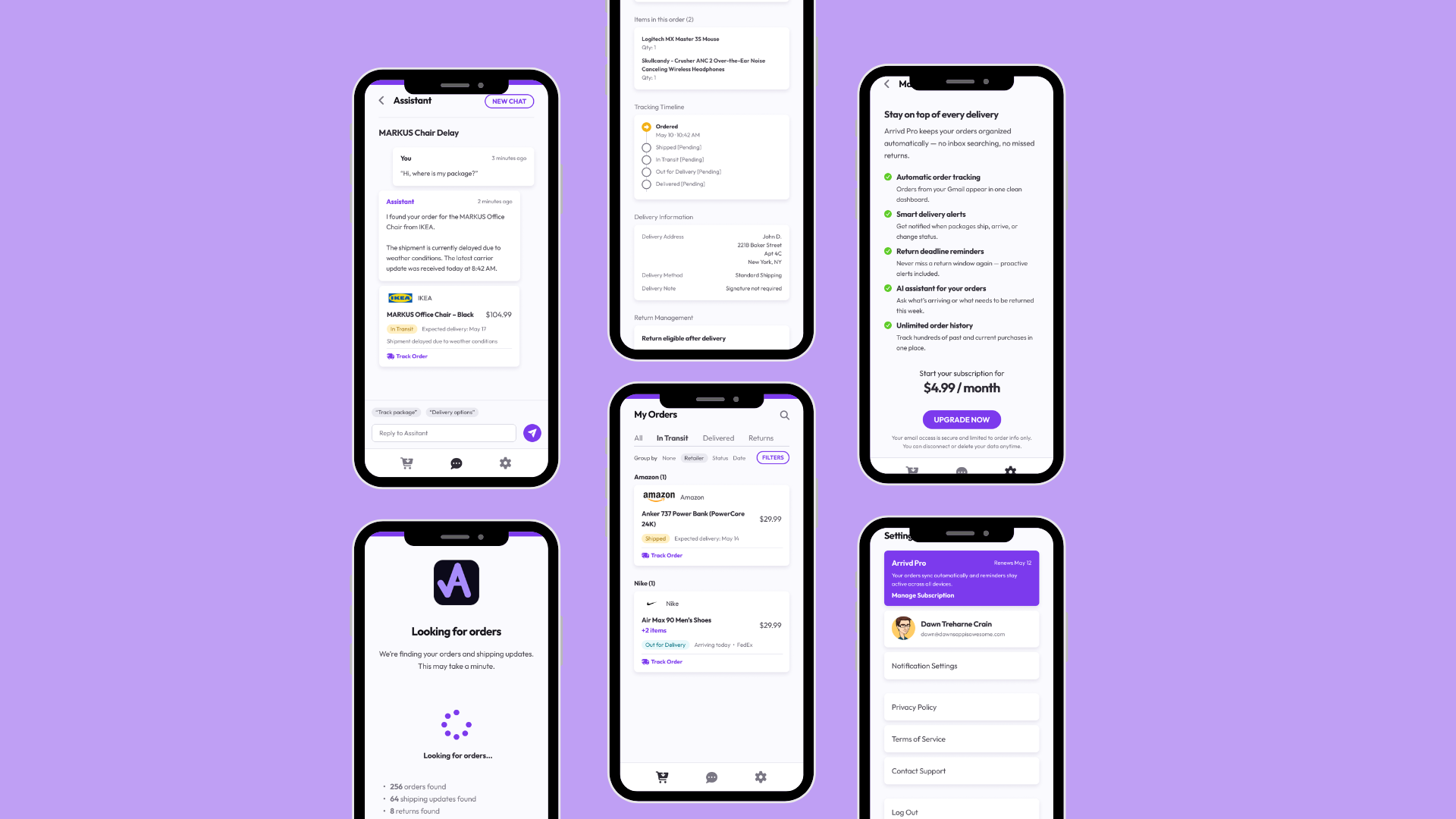
Arrivd
Arrivd is a mobile package tracking app that automatically finds and tracks deliveries by connecting to a user’s Gmail account. Instead of asking users to manually copy tracking numbers from emails, retailer apps, and carrier websites, Arrivd brings all expected packages into one simple, real-time delivery overview.
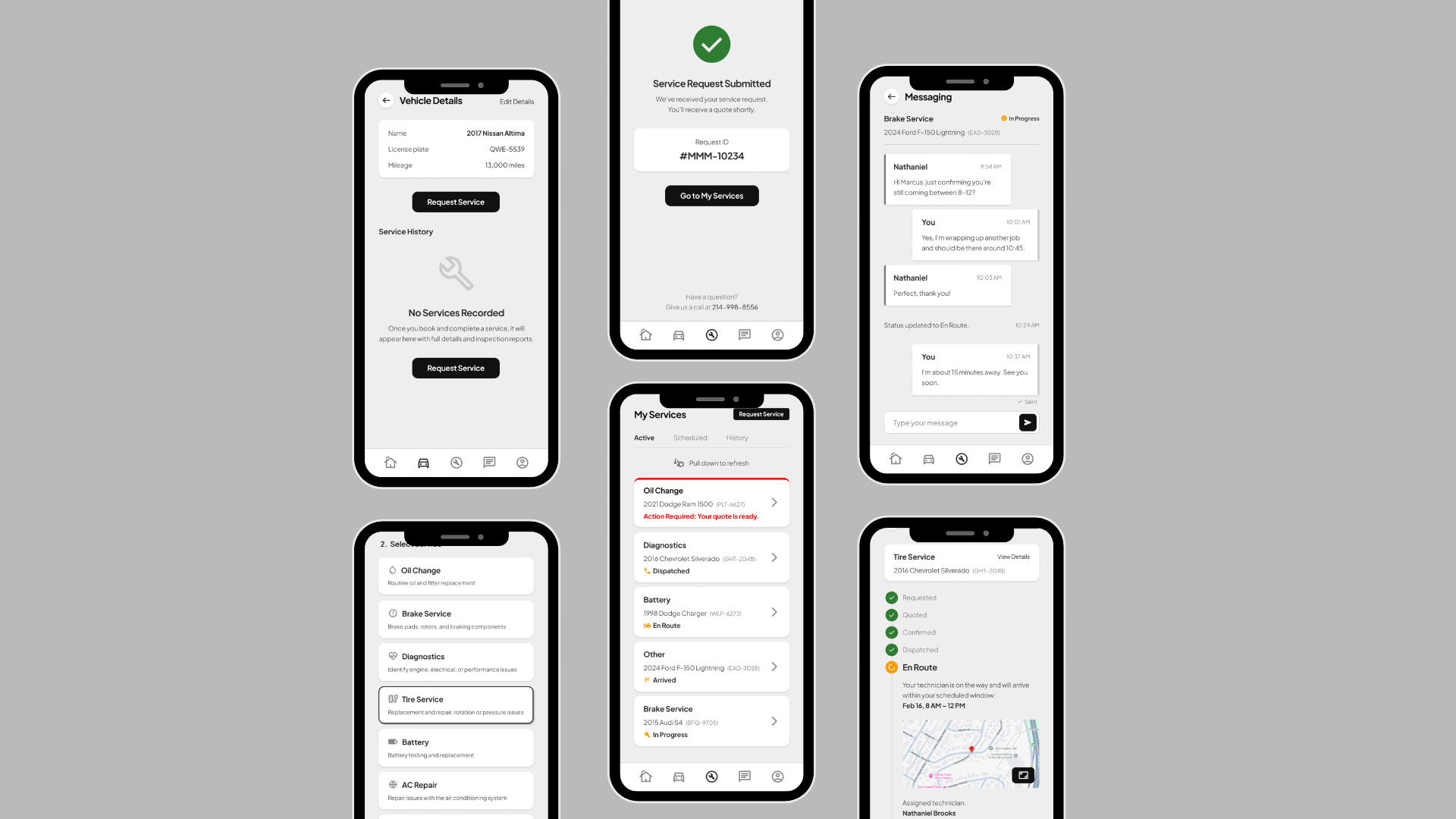
MMM | On-demand mechanics
MMM Mobile Mechanics is a mobile-first automotive service platform that connects vehicle owners in Texas with vetted mobile technicians. The app helps customers request car services, receive quotes, track job progress, message technicians, and handle payments in one place, while giving technicians a clearer way to manage jobs and earnings.