Can AI App Builders Replace a Development Agency in 2026? What They Can and Can't Do
2026-11-02 · Appsoluty team
AI app builder vs development agency is turning into a real question, not a contrarian take. Lovable, Bubble, Replit Agent, and v0 can now take you from a blank screen to a working app in an afternoon, and some of them do it for less than the cost of a single lunch meeting with an agency's account manager. The honest answer is mixed: for a narrow slice of projects, an AI app builder is genuinely enough, maybe even the better choice. For a real business system with more than one kind of user, real integrations, or anything regulators care about, it usually isn't, and the gap between those two categories is where most of the current debate gets confused.
Can an AI app builder actually replace a dev agency?
Here's the direct answer, without the hedge most comparison articles bury it under. If what you need is a prototype, an internal tool for a handful of people, or a simple CRUD app to prove a hypothesis before you spend real money, yes, an AI app builder can replace a development agency for that job, and paying an agency for it would usually be a waste of your budget. If what you need is a product with more than one type of user, a third-party integration that goes beyond a documented REST API, or anything touching money, health data, or compliance, the honest answer is no, not yet, and probably not with the current generation of tools.
That split matters more than it sounds like it should, because the two categories get lumped together in almost every piece of content ranking for this topic right now, and if you've already been burned once, see how freelancer vs. agency stacks up too before you assume the fix this time is a tool instead of a diagnosis of what actually broke last time.
Why this debate is happening right now
This argument has a specific origin point, not just general AI hype. Through 2026, a wave of posts and social threads described founders swapping an expensive agency quote for a cheap, self-serve AI builder, the kind of tool priced as an inexpensive monthly subscription rather than a quoted project fee, well under what a single hour of agency time costs. Those stories are vendor-friendly by design: most trace back to the builder companies themselves or their most enthusiastic users, describing one specific, usually simple project, not an audited, independent account of what a typical business build actually needs.
Agencies pushed back just as loudly, with their own framing of what a "real" software project costs and how long it takes once an AI tool tries to handle it alone. Some of that pushback comes from companies that sell competing AI-building tools and have their own reason to make traditional agencies look slow and expensive by comparison. More often than not, both sides of this debate are companies selling something arguing against the other category of company selling something, and neither side's content is an independent account of what your specific project needs.
What's actually true sits in between. AI builders really have gotten dramatically faster at producing a working prototype. Agencies really do sometimes over-scope a project that didn't need six weeks of discovery. Both things being true doesn't make either side's marketing content an honest guide to what your specific project needs.
What AI app builders are genuinely good at
Give AI builders their due, because most agency content on this topic won't. Lovable, Bubble, Replit Agent, and v0 are genuinely good at a specific, valuable job: getting an idea in front of real users fast, before anyone commits serious money to it. A solo founder with no technical cofounder can go from an idea to a clickable, usable prototype over a weekend, test it on actual prospects, and find out whether the idea is worth building at all. That's not a consolation prize next to "real" software. It's often the smarter move, and skipping it to hire an agency first is a common, expensive mistake.
They're also a legitimate long-term fit for simple, single-user-type tools: an internal dashboard for your ops team, a form-driven approval workflow, a basic CRUD app that reads and writes a handful of tables without much logic running between them. If the whole job is collecting data, displaying it, and letting one kind of user edit it, you may never need to graduate off an AI builder for that specific tool.
The common thread is validation, not production scale. If your idea isn't validated yet, start there before either option, because the cost of hiring anyone (a freelancer, an agency, or an inexpensive self-serve tool) to build the wrong thing well is still the cost of building the wrong thing.
Where they hit a wall on a real business project
The wall is real, and it shows up in roughly the same four places every time. Founders who've watched a no-code app outgrow Bubble or Airtable will recognize the shape of what follows: the same ceiling shows up later if you build on an AI app builder, too, just one layer up the stack, with an AI model generating code instead of a visual editor assembling it.
Third-party integrations beyond simple APIs
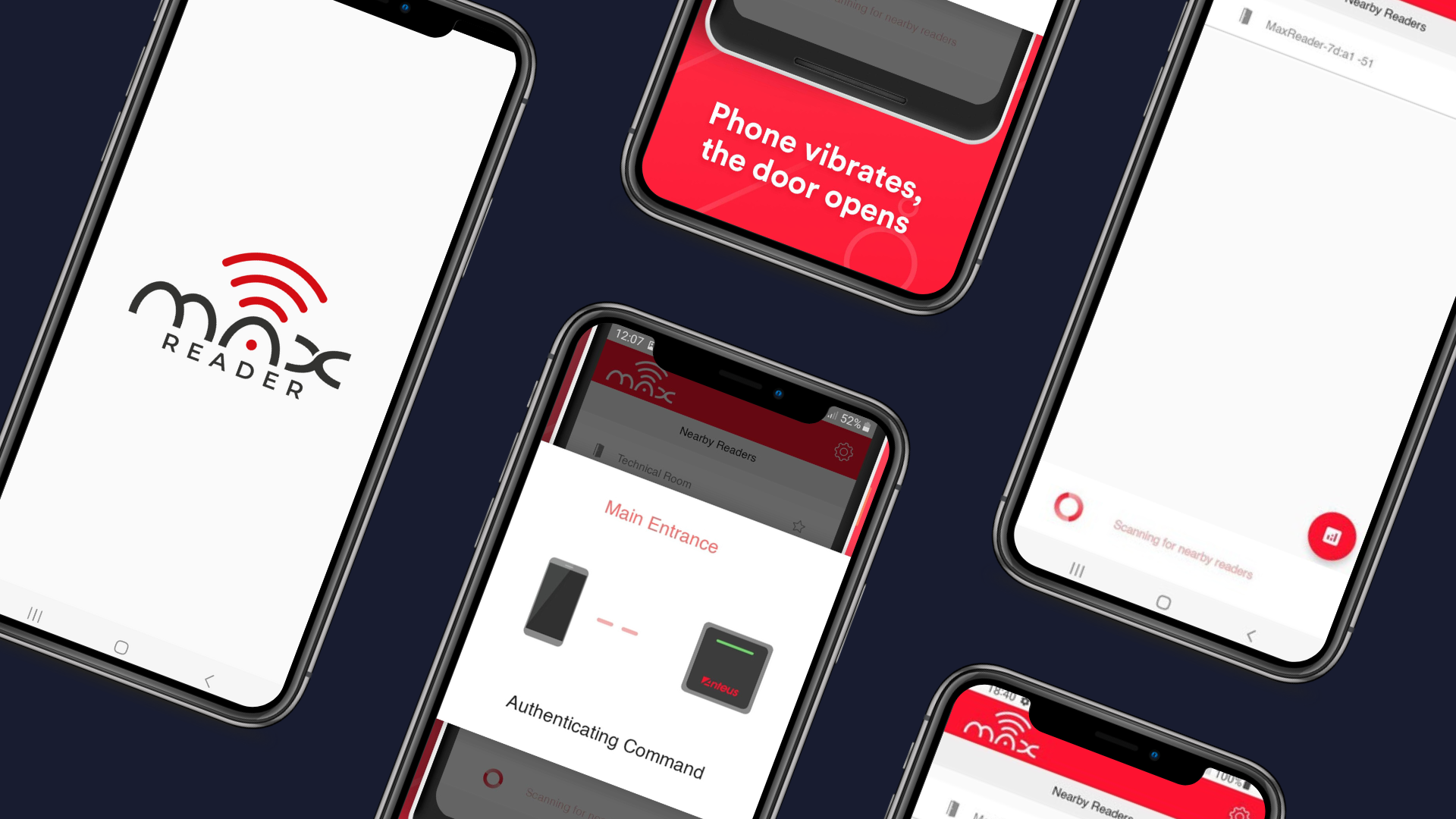
AI builders handle a documented, well-behaved REST API reasonably well: send a request, get JSON back, show it on a screen. They handle far less well the integrations that make up a lot of real business software, an OAuth flow with a provider that expects a specific redirect and token-refresh dance, a legacy on-premises system with no modern API at all, or anything involving hardware. A project like this hardware access system is the kind of integration work that's outside any no-code AI builder's reach: a physical access-control system reading RFID cards, NFC taps, Bluetooth Low Energy signals, and QR codes, and reconciling all four identification methods against one backend in real time. There's no prompt that gets an AI builder to talk to a BLE reader bolted to a door. That's hardware-specific work, and it's exactly the kind of project no vendor comparison page mentions, because it doesn't fit a demo.
Multi-role platforms and marketplace logic
The moment a product has more than one kind of user who need to interact with each other, not just with the system, the complexity jumps in a way these tools aren't built for. A marketplace with buyers and sellers, a platform that vets and matches two sides of a transaction, a booking system with customers, providers, and an admin role all seeing different slices of the same data: that's multi-sided workflow logic and permission boundaries between roles, and state that has to stay consistent across all of them. AI builders can fake a demo of this with two hardcoded user types and a handful of screens. They struggle once real business rules show up: what happens when a seller cancels after a buyer has paid, who can see what during a dispute, how matching actually ranks results instead of just listing them.
Compliance and sensitive data
Healthcare, finance, and anything else a regulator has opinions about raise the stakes past what a prompt-driven tool is built to handle responsibly. HIPAA, PCI, and similar frameworks aren't really about functionality, they're about proving, to an auditor, exactly how data is stored, encrypted, logged, and access-controlled, and being able to show your work. An AI builder optimizes for getting you to a working screen fast. Compliance work is slow by design: documented decisions, audit trails, and a human who can answer for the architecture when a regulator or an enterprise customer's security team asks a pointed question. That accountability doesn't come from a tool. It comes from a team that signs its name to the answer.
Who owns the code, and what happens when the AI gets it wrong or the platform changes terms
The ownership question gets skipped in almost every "I replaced my agency" story. Some AI builders generate code you can export and fully own. Others keep your app running on their infrastructure, under their pricing, under terms they can change. Either way, when the AI generates something subtly wrong, a data model that doesn't scale, a security gap nobody prompted it to avoid, there's no engineer who designed it and can explain why, just a diff you have to debug yourself or pay someone else to debug for you. And a business built on a cheap, self-serve tool is also built on that vendor's roadmap: a pricing change, a feature deprecation, or the vendor shutting down turns into your emergency, on their timeline, not yours.
The questions that tell you which camp you're in
Run your actual project against these before you pick a side in this debate.
- Does this need more than one type of user who interact with each other, not just with the system? If yes, you're past the builder's comfort zone.
- Does it need to talk to anything that isn't a clean, documented API, hardware, legacy systems, or a provider with a non-trivial OAuth flow? If yes, same answer.
- Does it touch health records, payment data, or anything else a regulator cares about? If yes, you need a team that can be accountable for that, not a tool.
- Are you still validating whether anyone wants this at all? If yes, an AI builder is very likely the right call, for now.
- Is the whole job one user type reading and writing some records with no complex logic between them? If yes, you may genuinely never need to leave the builder for this specific tool.
Two or more "yes" answers in the first three point toward a development partner. A "yes" to the last two is a real, defensible reason to stay on the builder, at least for this stage of the project.
What a vetted development partner gives you that a cheap AI builder can't
A development partner worth paying for gives you specific things a self-serve tool structurally can't, and it's worth naming them instead of leaving it at "more expertise."
A named team, not a black box. At Appsoluty, for example, that's ten people: dedicated AI, mobile, web, and backend developers, plus a dedicated QA specialist and a dedicated UX/UI expert, not one generalist covering every discipline. You know who's building your multi-role marketplace logic and who's testing it, because they're different people with different jobs.
A discovery phase before anyone writes code. Every engagement starts with working out scope and an execution plan, then design, before development begins, which is the step that catches "this needs OAuth with three providers" or "this needs to log every access event for an audit" before it becomes a mid-project surprise instead of a line item in the plan. Work can typically start within a few days of the first call once that scope is set.
Any subcontractor brought onto a project is someone the team has already known and worked with for a long time, operating under an NDA and a framework agreement, on a company-issued machine, not a stranger sourced for this one job.
Code ownership and accountability that doesn't depend on a vendor's roadmap. Work is billed weekly based on hours actually worked, starting once the contract is signed, not once a subscription renews. If something's built wrong, there's a specific person and a specific team who built it and who are on the hook to fix it, not a model you have to re-prompt and hope for a different result from.
Hourly estimates upfront, not a vague monthly fee. The rate is $70 an hour, and tasks are estimated in hours before work starts, so you see the projected cost before you commit, whether the engagement ends up billed hourly or milestone-based depending on what the project needs. That's a materially different kind of number than an inexpensive flat monthly subscription, because it's tied to the actual work on your actual project, not a flat fee that has nothing to do with how complex your build turns out to be.
None of this is free, and it shouldn't be compared against an inexpensive monthly subscription as if the two things buy the same outcome. It's also worth being honest about a related claim that comes up here: even agencies using AI coding tools don't automatically get the speed-up vendors claim, so hiring an agency that also uses AI isn't a shortcut to the best of both worlds either. A partner's value isn't that it uses AI differently. It's the discovery process, the named accountability, and the estimate you can check against the work delivered, the same things a cheap, self-serve tool was never built to offer in the first place.
FAQ
Can I really build a business app with Lovable or Bubble alone?
For a prototype, an internal tool with one type of user, or anything you're still validating, yes. For a system with multiple user roles, real integrations beyond a clean API, or regulated data, the honest answer is not on its own, at least not with what these tools do today.
What's the catch with the "$25/mo replaced my agency" stories?
The catch is who's telling the story. These accounts typically trace back to the AI-builder vendors themselves or their most enthusiastic users, describing one specific, usually simple project, not an audited, independent account of a typical business build. A low monthly price for the tool itself is real, these are built to be an impulse purchase, not a budgeted line item. The implication that the same math holds for every agency quote, on every kind of project, isn't.
When does an AI app builder stop being enough?
Right around the point where your product needs more than one kind of user interacting with each other, an integration that isn't a documented API, or any handling of health, payment, or otherwise regulated data. Those are the places where the current generation of builders hits a wall that isn't about a better prompt.
Can I start on an AI builder and bring in a dev team later?
Yes, and for an unvalidated idea, it's often the right sequence. Build and test the idea cheaply first, then bring in a team once you know the idea works and need the integrations, user roles, or compliance a self-serve tool can't carry. A good partner should be able to look at what you built and tell you honestly what's salvageable and what needs rebuilding, rather than insisting on a rebuild from zero by default.