Outsourced CTO vs. Technical Co-Founder: What a Non-Technical Founder Actually Needs
2026-10-03 · Appsoluty team
Outsourced CTO vs technical co-founder is the choice most non-technical founders think they're facing when they decide to build a product. It's the wrong frame. One path costs you equity in a company that doesn't exist yet. The other costs you a monthly retainer for advice. Neither one, by itself, answers who actually writes the code, ships the first version, and is still around when something breaks three weeks before a demo.
If you're a doctor, a lawyer, a logistics operator, or a contractor with a workflow you know cold and an idea for the software that should run it, you're not choosing between two startup philosophies. You're deciding how to spend a finite budget and a limited amount of trust on the one problem that's genuinely hard: getting a working product built by people who are good at building it.
What a technical co-founder actually costs you (beyond salary)
A technical co-founder isn't a hire. They're a shareholder with a permanent vote in every decision the company makes, for as long as the company exists. Before you post in a founder-matching group or make an offer to someone you met at a meetup, it's worth pricing out exactly what that vote costs.
Standard equity ranges by stage and commitment: what 25-50% actually means for a cap table
For an idea-stage company where the technical co-founder is joining full time before you've built anything, the going rate is 25 to 50 percent of the company, according to data compiled on technical co-founder equity norms. That's not a signing bonus. It's permanent ownership that dilutes every future raise, every employee option pool, and your own stake at exit.
Compare that to hiring a founding engineer who isn't a co-founder: roughly 1 percent of the company plus a market salary, per the same source. The difference between those two numbers is the difference between someone who helps you build this and someone who owns a third of what you build, forever, whether or not they're still involved. Most non-technical founders don't realize how wide that gap is until they're staring at a cap table two years later.
Why the 4-year vesting, 1-year cliff standard exists, and what happens without it
The standard structure for any co-founder equity grant, technical or otherwise, is four-year vesting with a one-year cliff: nothing vests until month twelve, then 25 percent vests at once and the rest accrues monthly after that, a structure well documented in standard startup equity compensation terms. The cliff exists for one reason: it protects you from granting 30 percent of your company to someone who leaves after four months.
Skip the vesting schedule, which happens more often than it should when two people are excited and in a hurry, and you can end up with a co-founder who owns a third of the company and did three months of work. That person doesn't have to answer your calls. They don't have to keep building. They just have to exist on your cap table, and investors will ask about them at every future raise.
What an outsourced or fractional CTO actually costs
A fractional CTO solves the equity problem. You pay cash, not shares, so the cap table stays clean. What that cash buys you is narrower than most founders expect going in.
Monthly retainer ranges by company stage: what you get for $8k-$25k a month
Pricing tracks company stage closely. Pre-seed companies typically pay $8,000 to $12,000 a month, seed-stage companies $12,000 to $18,000, and Series A companies $18,000 to $25,000, based on fractional CTO pricing by funding stage. Engagement depth matters as much as stage: an actively engaged fractional CTO, putting in 20 to 40 hours a month, runs $10,000 to $25,000 a month, while a lighter, advisory-only arrangement at 10 to 15 hours a month runs $4,000 to $10,000, according to a detailed breakdown of fractional CTO engagement tiers.
Those numbers only make sense against the alternative they're replacing: a full-time CTO's salary, which the same pricing breakdown puts at $300,000 to $500,000 a year. Against that baseline, a fractional CTO looks cheap. Against a self-funded founder's typical budget for a first phase, often $15,000 to $30,000 total, a $10,000-a-month retainer eats the entire budget in under three months, before a single feature ships.
What a fractional CTO does vs. doesn't do: advisory vs. hands-on delivery
Here's the distinction that gets lost in most of the marketing around fractional CTOs: the 10-to-15-hour advisory tier buys you a smart person to review architecture decisions, vet a tech lead, and sanity-check your roadmap. It does not buy you someone who sits down and builds the product. Even the higher, 20-to-40-hour active tier is still a fraction of a work week, spread across strategy, hiring, and oversight, not hands-on development. A fractional CTO is a part-time advisor to a team that already exists. If that team doesn't exist yet, you've hired a coach for a roster you haven't filled.
The question neither option answers: who actually builds the product?
Strip away the pricing and both options converge on the same gap.
Fractional CTOs advise; they rarely write code or own delivery end to end
A fractional CTO's job, by design, is judgment, not production. They'll tell you whether your roadmap makes sense and whether a candidate engineer is any good. They generally won't be the one writing your app's backend at 2am to hit a launch date. If you need a person accountable for a shipped product, a part-time advisor isn't that person, no matter how good their advice is.
A solo technical co-founder is one person: what's the plan when they're wrong, slow, or gone?
A technical co-founder solves the accountability problem, at a cost: you've now made your entire technical function dependent on one human being's skills, availability, and judgment. What happens when they architect something wrong and you don't have the background to catch it until month six? What happens when they take a higher-paying job six months after the cliff, now that a quarter of their equity has vested? A team of ten people distributes that risk. One person, however good, doesn't.
Outsourced CTO vs. technical co-founder vs. embedded dev partner: side by side
| Option | Equity cost | Cash cost | Time to start | Decision control | Who writes the code | Risk if the relationship breaks | Best-fit scenario | _url |
|---|---|---|---|---|---|---|---|---|
| Technical co-founder | 25-50% (idea stage, full time) | Salary, often below market | Weeks to months (recruiting and vetting a stranger) | Shared permanently, by cap table | The co-founder, if and when they have time | Equity stays on the cap table even if they leave | A long-term technical partnership where you want a lifelong equal partner | https://www.cleveroad.com/blog/technical-co-founder-equity/ |
| Outsourced / fractional CTO | None | $4,000-$25,000/month depending on engagement tier and stage | Days to weeks | Advisory only, you keep the final call | Not usually the fractional CTO, they oversee others | Advice stops, relationship ends cleanly, no equity entanglement | A funded company that already has a dev team and needs senior oversight | https://pangea.ai/resources/fractional-cto-services-complete-guide-for-startups-2025 |
| Embedded delivery partner (one defined build) | None | Hourly or milestone-based, scoped to the build | Days after a discovery call | You own the product decisions, they own delivery | A dedicated team assigned to the build | No equity entanglement, and the relationship can end cleanly between phases | A self-funded domain expert with a validated idea and a $15k-$30k first-phase budget | https://appsoluty.com/blog/red-flags-hiring-outsourced-software-development-partner |
Read this table against how that compares to the freelancer-vs-agency tradeoff and the pattern holds: the binary choice you're being offered usually isn't the real choice. The real choice is whether you need a permanent technical partner, a part-time advisor, or a team that ships a specific thing.
Why domain experts, doctors, lawyers, logistics and construction founders, usually need neither
You already have the hardest part: a validated problem and workflow knowledge
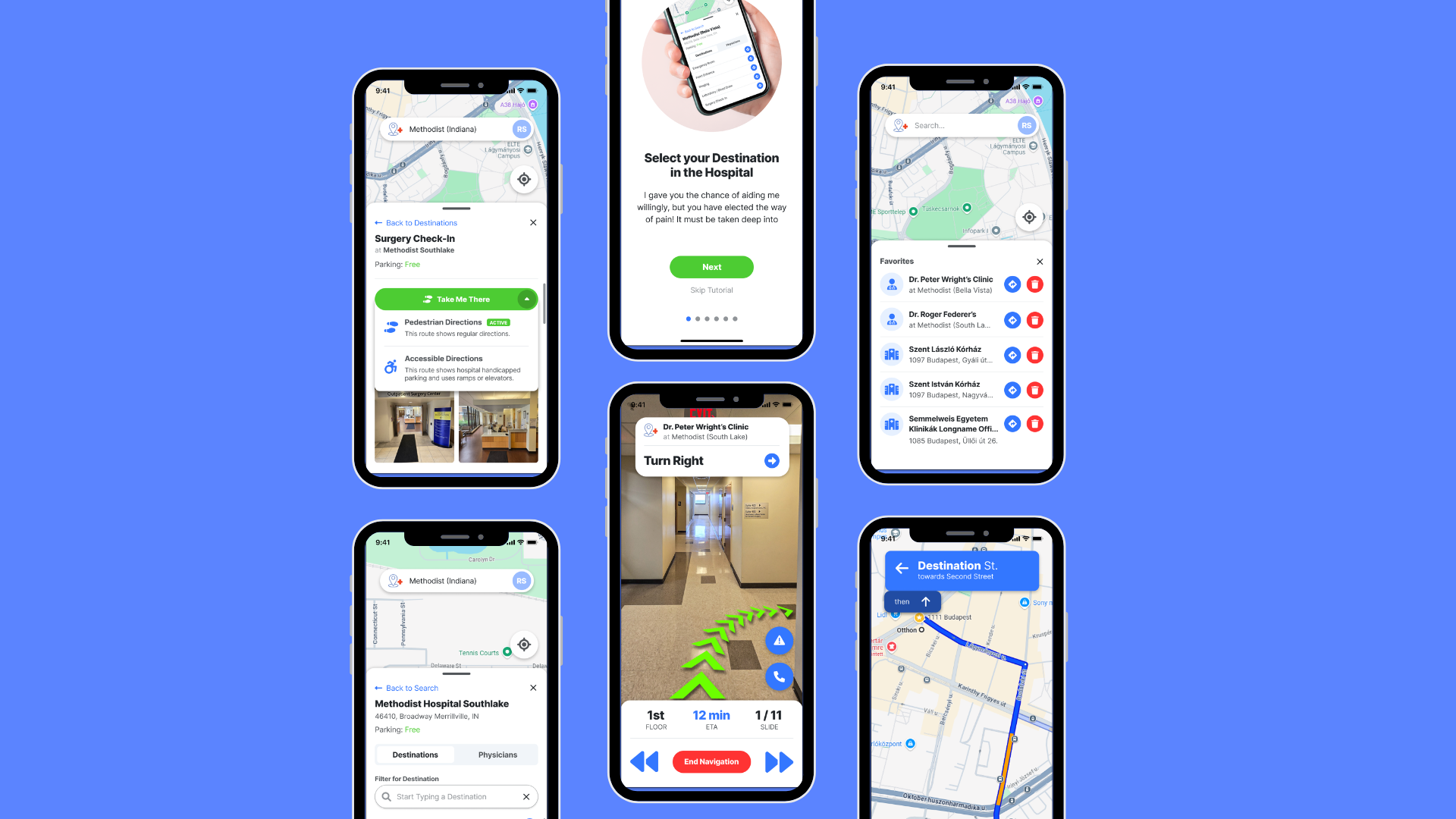
If you've spent ten years running a dental practice, a logistics route, or a construction crew, you already have the part of the business that investors pay the most to validate: a real problem, observed firsthand, that you understand better than any engineer you could hire. That's the hard part. Discover My Doc is a good example of what that looks like translated into a product: a healthcare-navigation idea became a working product once the domain problem was clearly specified, not once someone gave up equity to a technical co-founder.
What you actually need: someone who turns workflow knowledge into a spec, then delivers it
What you're missing isn't equity ownership or strategic oversight. It's translation: someone who can sit with you, turn what's in your head into a spec an engineering team can build against, and then build it. That's a delivery problem, not a co-founder problem. The same gap shows up industry after industry. The same translation problem shows up for logistics-industry founders who know exactly how freight should move but have never written a line of code.
The real risk of giving equity to a stranger
Co-founder conflict is a leading cause of startup failure
Research on startup failure, most notably Noam Wasserman's work in The Founder's Dilemmas, has repeatedly pointed to co-founder conflict as one of the leading causes of failure among high-potential startups, a finding summarized in reporting on Wasserman's founder-conflict research. Hand a third of your company to someone you met two months ago, and you've made that conflict risk a permanent feature of your cap table rather than a temporary vendor relationship you can exit.
What a bad technical co-founder breakup costs later: a messy cap table, lost negotiating position, and a rebuild from scratch
A bad vendor relationship ends with an invoice dispute. A bad co-founder relationship ends with a former co-founder who still owns a chunk of your company, may still have access to your codebase, and has to be dealt with, bought out, or litigated against, every time you try to raise money or sell the business. Some founders end up rebuilding their product from scratch rather than keep working inside the architecture a departed co-founder left behind. That's a worse outcome than whatever a few months of lost development time would have cost you.
A decision framework for a $15k-$30k first phase
If your budget is one well-defined build, not a 10-year bet
If what you actually have is a validated idea, a defined first version, and a budget in the $15,000 to $30,000 range, you're not shopping for a co-founder or a part-time executive. You're shopping for a team that can scope the build, estimate it accurately, and deliver it. That's a smaller, more concrete decision than who you want to spend the next decade with. At $70 an hour, with hours estimated per task before work starts so you can see the projected cost upfront, a ten-person team covering AI, mobile, web, backend, QA, and UX/UI can take a scoped first phase from discovery through delivery, starting within days of the first call, with work billed weekly against hours actually worked. You don't need to find a stranger willing to be your technical soulmate to get a working product built. On the vetting question specifically: a team that only brings in collaborators it has worked with for years, puts each one under an NDA and a framework agreement, and issues them a company-owned machine for client work is answering the "who touches my codebase" question before you have to ask it.
Questions to ask before you offer equity or sign a retainer
Before you make any offer, ask the people on the other side of the table:
- Who, specifically, writes the code: the person I'm talking to, or a team I haven't met?
- What happens to this relationship if I need to pause or end it in three months?
- Can I see the hours or milestones before I'm billed for them?
- Who vets the people actually touching my codebase, and under what agreement?
- If this is equity, what's the vesting schedule, and what happens at month six if it's not working?
Once you've got answers, read red flags to watch for when vetting any outsourced technical partner before you sign anything. Most of the expensive mistakes in this decision show up in the answers to those questions, not in the headline price.
FAQ
Do I need a technical co-founder to start a software business?
No, not for a first version. You need a validated problem, a clear spec, and a team that can build and ship against it. A technical co-founder makes sense when you want a permanent equal partner for a long-term company, not when you need a defined product built inside a known budget. Plenty of domain-expert founders ship a working first version through a delivery team and decide later, with real usage data in hand, whether they want a permanent technical partner at all.
How much equity should I give a technical co-founder?
For a true idea-stage, full-time co-founder, the market range is 25 to 50 percent, vesting over four years with a one-year cliff. A founding engineer who isn't taking on co-founder-level commitment and risk should be closer to 1 percent plus salary. If someone is asking for co-founder-level equity without co-founder-level commitment, in hours and in cash forgone, that's a mismatch worth naming before you sign anything.
What does a fractional or outsourced CTO cost per month?
Expect $4,000 to $10,000 a month for a light, advisory-only engagement of 10 to 15 hours, and $10,000 to $25,000 a month for a more active 20-to-40-hour engagement, with pricing trending toward the lower end at pre-seed and higher at Series A. For a self-funded founder with a one-time build budget of $15,000 to $30,000, even the cheapest fractional CTO retainer consumes that budget in a matter of weeks, before any code ships.
Can a development partner replace both a technical co-founder and a CTO for a first build?
For the specific job of shipping a scoped first version, yes. An embedded delivery team takes on the part a technical co-founder would own, actually building the product, and the part a fractional CTO would own, making sound technical decisions, without asking for equity or a five-figure monthly retainer. What it doesn't replace is a long-term equal partner invested in the company's future the way a co-founder is. For a validated idea and a defined budget, that tradeoff is usually the right one; for a decade-long bet two people are making together, it isn't.