
Nearshore vs. Offshore vs. Onshore Software Development: Which Model Fits Your Business
2026-10-05 · Appsoluty team
Nearshore vs. offshore vs. onshore software development isn't a debate with a single right answer. It's a trade-off between cost, time zone overlap, and risk tolerance, and the correct call depends entirely on where your business sits on the map and what you're trying to get built. Teams that treat the choice as "which model is cheapest" end up with the wrong vendor for their actual problem, whether that's a scoped technical phase, a compliance requirement, or a team that's already been burned once and can't afford to get it wrong again.
What "onshore," "nearshore," and "offshore" actually mean
Onshore means a development team in your own country, on your own working hours, usually subject to the same labor and data laws you operate under. Nearshore means a team in a nearby country, close enough in time zone that your workday and theirs overlap for most of a shift. Offshore means a team on the other side of the planet, often with little or no live overlap, where handoffs happen asynchronously and a question asked at 5pm gets answered the next morning.
None of these are fixed properties of a vendor. They're relationships between two points on a map, and the same company can be a different model depending on who's asking.
Why the same partner can be nearshore for one client and offshore for another
Appsoluty is based in Hungary, with a ten-person team spanning dedicated AI, mobile, web, and backend developers plus a dedicated QA specialist and a dedicated UX/UI expert. For a client in London or Berlin, that's a nearshore relationship: one or two hours of offset, full overlap during the working day, and a setup barely distinguishable from hiring locally. For a client in Texas or New York, the distance puts the relationship in offshore territory on paper, but Central European working hours still overlap with a US client's morning, so the practical experience sits closer to nearshore than the raw mileage suggests. A client in Dubai gets a third kind of overlap again, shaped by a different working week and a different slice of the day.
The same company, the same ten people, three different labels, depending entirely on where the client is sitting. The kind of client commissioning an app built for a market like the one behind Ride Tether, a UK-focused group ride navigation tool for motorcyclists, sits in a genuinely nearshore relationship with that same Hungary-based setup. The kind of client commissioning a product built for a market like the one behind a mobile vehicle-repair marketplace built for Texas car owners, on the other hand, is working across a much wider gap, and still gets a usable daily overlap window out of it. The lesson isn't about either specific engagement. It's that the label follows the client, not the vendor.
| Onshore | Nearshore | Offshore | |
|---|---|---|---|
| Typical cost | Highest, matches your own country's rates | Moderate, commonly cited as 30-50% below onshore | Lowest on paper, though the real gap varies a lot by region |
| Time zone overlap | Full overlap, same working day | Usually a 1-3 hour offset, still the same working day | Often a 6-12 hour gap, little or no live overlap |
| Typical use case | Compliance-heavy work, or work that needs constant in-person collaboration | Daily standups, fast iteration, senior ownership of a scoped phase | Large, well-specified work that doesn't depend on much live back-and-forth |
Cost: what you actually pay at each tier
Onshore rates reflect your own country's cost of living and tend to be the highest of the three, which is the whole reason nearshore and offshore exist as categories at all. Nearshore and offshore rates both run below onshore pricing, though the exact gap varies a great deal by country pair and by which talent pool a vendor is actually staffing from, and it narrows once you account for management overhead, rework, and the time your own staff spends coordinating across a bigger distance. Those are directional numbers, not a guarantee, and they vary by country pair and by how the engagement is actually run.
What matters more than the headline rate is how the number gets built. Appsoluty prices work at $70 an hour, with tasks estimated in hours upfront so a client can see the projected cost before anything starts, rather than being handed a lump sum and hoping it holds. Engagements run on a milestone or hourly basis depending on what the project needs, billed weekly against hours actually worked, and work begins once the contract is signed, after a discovery phase sets the scope and plan and design work follows. That structure matters more for predicting your real spend than the country the invoice comes from, and it's also where a lot of outsourcing budgets quietly blow up. If you want the detail on how that happens, the hidden costs that don't show up in the hourly rate covers the gaps between a quoted rate and an actual bill.
Collaboration and time zone overlap: the difference that actually bites
Cost gets most of the attention in sourcing decisions, but time zone overlap is the variable that actually determines whether a project runs smoothly day to day. A nearshore offset of one to three hours means you can run a live standup, pair on a hard bug in real time, and get a same-day answer to a blocking question. An offshore gap of six to twelve hours means almost none of that: questions go out at the end of your day and come back at the start of the next one, which works fine for well-specified, self-contained work and badly for anything that needs constant back-and-forth.
This is also where the "same vendor, different label" point from section one actually bites in practice. A Hungary-based team working European hours gives a UK or EU client full-day overlap. The same team still gives a US client a meaningful morning overlap window, enough for a daily sync even if the rest of the day runs asynchronously, which is a very different experience from a twelve-hour gap with no live overlap at all. Before picking a model on time zone grounds alone, map out what a typical day of collaboration would actually look like, not just the number of hours between two cities on a clock.
Risk, compliance, and IP protection by model
Risk doesn't map cleanly onto the onshore, nearshore, offshore split. Onshore engagements aren't automatically safer on data handling or IP, and offshore ones aren't automatically riskier, despite how often that gets assumed. What actually protects you is how the vendor runs its own vetting and contracting, regardless of where its people sit.
Appsoluty works only with subcontractors the team has known and worked with for a long time, not names sourced for a single project. Every subcontractor operates under an NDA and a framework agreement, and works from a company-issued machine rather than a personal device. None of that is model-specific. A vendor on the other side of the planet can run that discipline just as well as one two time zones away, and a vendor next door can skip it entirely. When you're evaluating risk, ask about the vetting and the paper trail before you ask about the map.
A decision framework, not a vendor list
The right model follows from what you actually need, not from a general preference for "cheaper" or "closer." A few situations make the call clearer.
If you need senior ownership of a scoped phase, not added headcount
If what you need is a defined piece of work owned end to end, a migration, a new module, a specific integration, rather than bodies added to an existing team, nearshore usually wins on the overlap it buys you. You get enough live collaboration to course-correct quickly, at a lower rate than onshore, without the asynchronous lag that makes scope changes slow and painful on a fully offshore engagement.
If you've already been burned by a freelancer or a previous agency
A bad freelancer experience and a bad agency experience often get blamed on the wrong variable. The real difference usually isn't geography, it's engagement structure: whether you were working with one person juggling other clients, or a team with QA, project management, and continuity built in. That's a different sourcing decision from onshore vs. nearshore vs. offshore, and worth working through separately. A different sourcing decision: freelancer vs. agency walks through what actually changes when you move from one to the other.
If compliance or data residency is non-negotiable
Some industries and some contracts specify where data has to live or who's legally allowed to touch it, which can rule out certain geographies outright before cost or overlap ever enter the conversation. If that's your situation, start from the legal requirement and let it narrow the map, rather than starting from a budget and hoping the compliance question works itself out later.
Common mistakes when choosing a sourcing model
Picking a model on sticker price alone is the most common one. A lower hourly rate that comes with poor overlap, high turnover, or no QA process often costs more once you count the rework and the missed deadlines. Assuming the labels are fixed is another: treating a vendor as permanently "nearshore" or "offshore" instead of asking what the relationship looks like for your specific location leads to wrong expectations about overlap and responsiveness.
Skipping the vetting question is a third mistake, and it has nothing to do with which model you pick. A vendor's subcontractor practices, contracting terms, and device policies matter at every distance, and a buyer who only asks about hourly rate and time zone is leaving the bigger risk unexamined. Whatever model you land on, the red flags to check regardless of which model you pick are worth running through before you sign anything.
FAQ
Is nearshore always cheaper than onshore?
Usually, but not by a fixed amount. Nearshore rates commonly run 30 to 50 percent below onshore rates by industry estimates, though the actual gap depends on the specific countries involved and how the engagement is structured. A nearshore vendor with poor processes can still end up costing more than a well-run onshore one once rework and missed deadlines are factored in.
What counts as nearshore for a US company vs. a UK/EU company?
For a US company, nearshore typically means Latin America, where time zones line up closely with US business hours. For a UK or EU company, nearshore typically means other European countries, including places like Hungary, where the offset from Western Europe is only an hour or two. The same country can be nearshore for one of these buyers and offshore, or at least offshore-by-distance, for the other.
Can the same vendor be nearshore for one client and offshore for another?
Yes. A vendor's location is fixed, but the model label depends on the client's location, not the vendor's. A Hungary-based team is nearshore for a UK client, offshore by distance for a US client (though often with a workable morning overlap), and something different again for a client in the Gulf. None of that requires the vendor to change anything about how it operates.
Is offshore riskier for IP?
Not inherently. IP risk comes down to how a vendor vets and contracts its people, not how far away they sit. A vendor with no NDA, no framework agreement, and no control over devices is a risk at any distance, while one that insists on all three, as Appsoluty does with every subcontractor, manages that risk whether the team sits next door or on the other side of the world.
Related projects
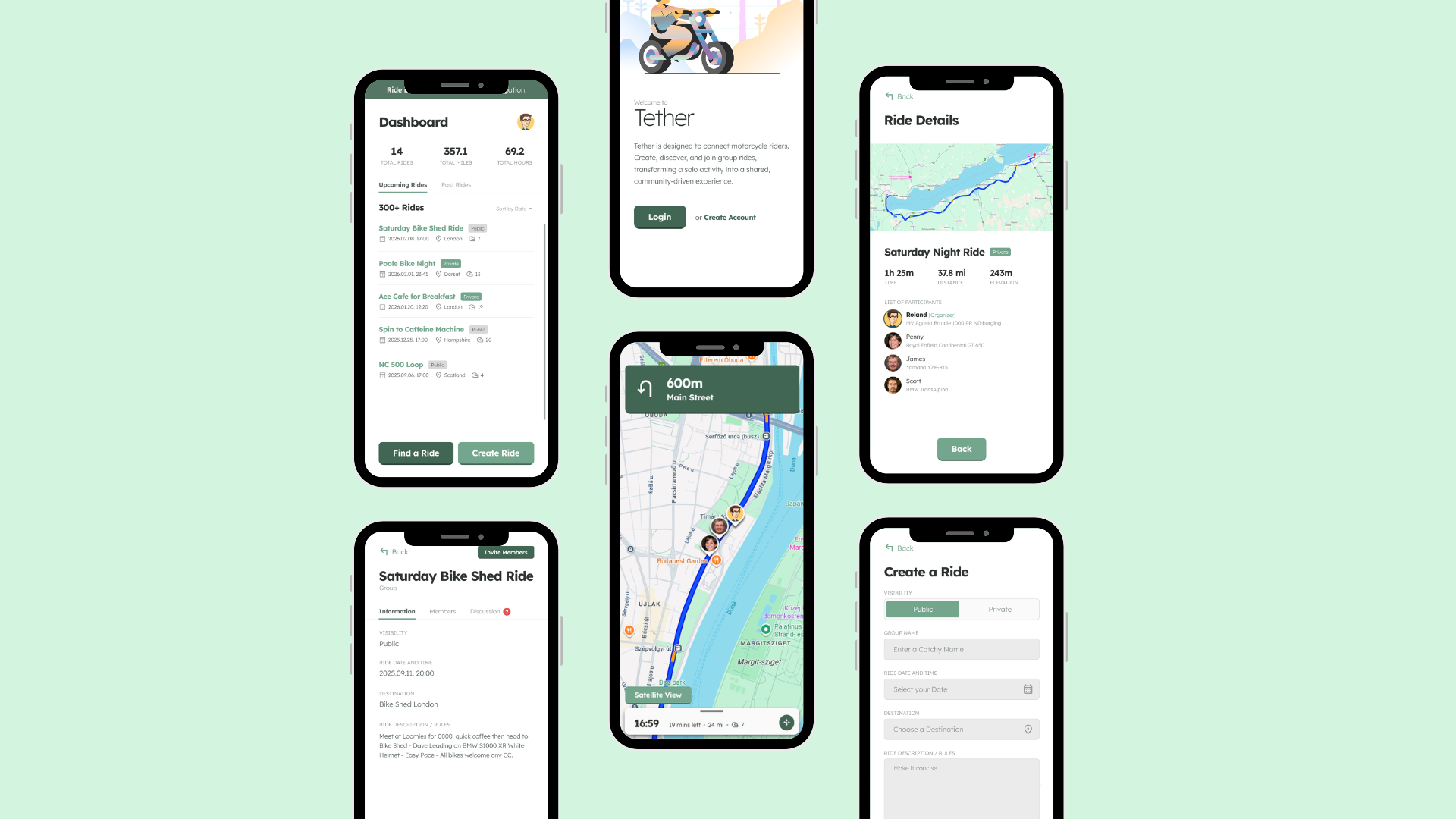
Ride Tether
Ride Tether is a free UK group ride navigation app built for motorcyclists who want to stay connected during shared rides. The app combines shared routes, live rider locations, and public or private ride groups so the whole pack can follow the same journey from start to finish.
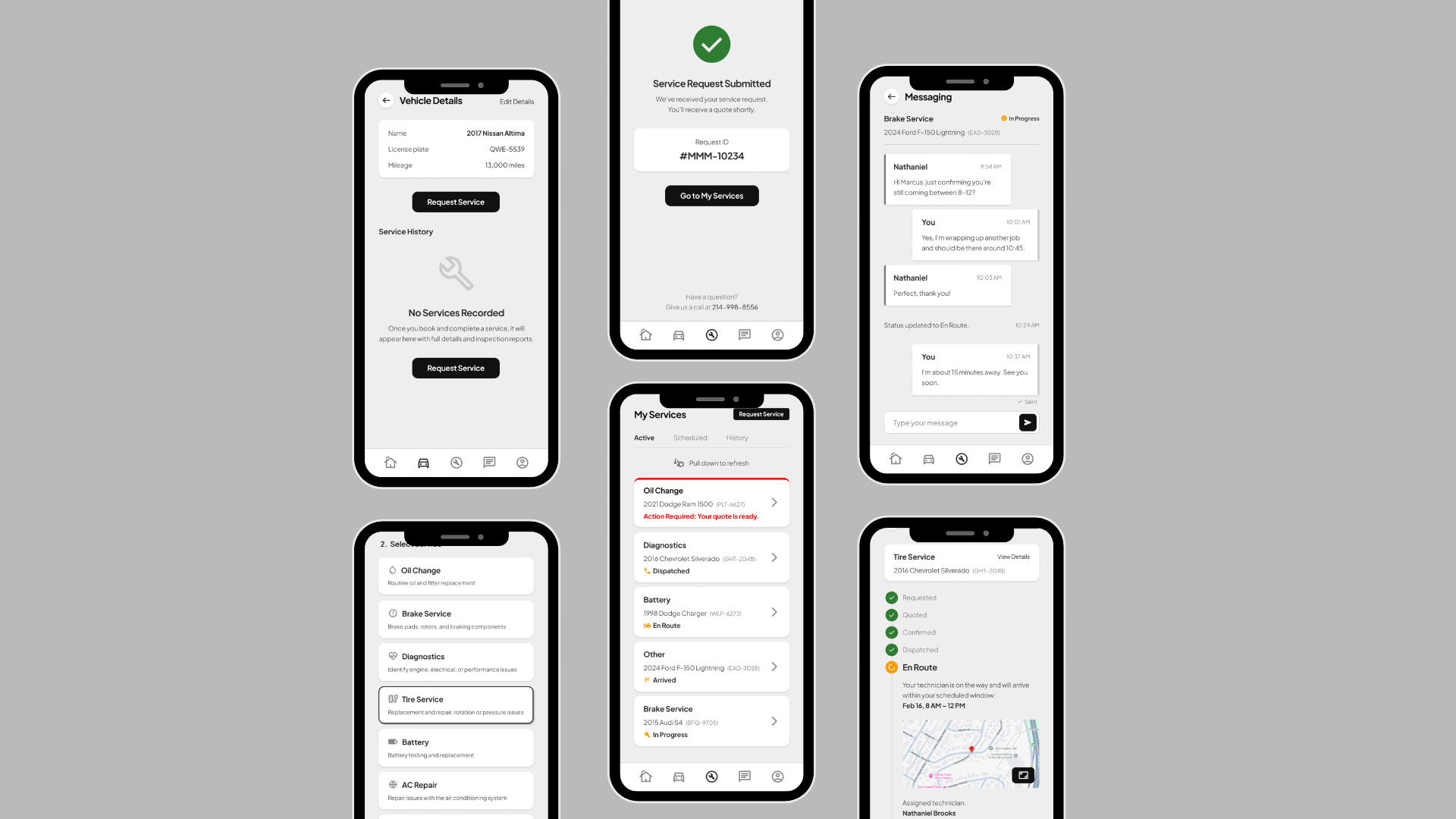
MMM | On-demand mechanics
MMM Mobile Mechanics is a mobile-first automotive service platform that connects vehicle owners in Texas with vetted mobile technicians. The app helps customers request car services, receive quotes, track job progress, message technicians, and handle payments in one place, while giving technicians a clearer way to manage jobs and earnings.